
Proximal Focal Femoral Deficiency (PFFD)
Discovering that your child has Proximal Focal Femoral Deficiency (PFFD) can be overwhelming.Our goal is to offer guidance to help you and your child through their PFFD journey and provide support along the way.
On this page you will find:
- What is Proximal Focal Femoral Deficiency?
- Why Does it Happen?
- How is PFFD Detected?
- Treatment of PFFD
- How Will PFFD Affect My Child?
- Sharing the News
- Support
- Resources
What is Proximal Femoral Focal Deficiency?
The condition is rare, occurring in approximately 1 in 40,000 births. PFFD stands for proximal focal femoral deficiency. It sounds very complicated, but when you look at each word individually, it is actually a very good description of the condition.
Proximal – nearest the point of attachment or centre of the body
Femoral – the thigh bone or femur
Focal – a focus or starting point
Deficiency – shorter or less than the normal amount
In other words, the end of the thigh bone closest to the hip is too short or not completely developed.
PFFD can look different for different children and is sometimes classified by Aitken categories as follows:
- Type A – the thigh bone (femur) is a little shorter but the hip joint is still mostly working and moving as expected
- Type B – the thigh bone is shorter and does not fit perfectly into the hip joint affecting movement of the hip
- Type C – the thigh bone is underdeveloped and does not connect well with the hip joint making walking difficult
- Type D – the thigh bone is not fully formed and there is no connection between the bone and hip joint making walking unaided difficult (a prosthetic leg or support may be required)
Steps have produced a downloadable PFFD factsheet and a more detailed publication – Proximal Femoral Focal Deficiency (PFFD), a Parent’s Guide – to introduce parents to the condition and discuss the possible treatments and expected outcomes.
Why Does it Happen?
The exact causes of PFFD are largely unknown, but it is known that it typically does not run in families and is therefore not considered genetic.
How is PFFD Detected?
PFFD can be spotted at routine antenatal scans, around 12 or 20 weeks of pregnancy, when the leg bones length are measured and limbs can be visually checked. Other cases are identified following birth, when newborn checks are performed. However, sometimes PFFD is not identified until later when the baby has grown, and the leg difference is easier to see. At this stage, the doctors will generally use an X-ray to see how the bones are growing and MRI (Magnetic resonance imaging) may also be used for further testing.
Steps have produced a downloadable publication, Leg Length Difference for parents who have been told of a possible problem with their baby’s legs.
Treatment of PFFD
Treatment will depend on the type of PFFD, how the hip is working and how much it is affecting day to day life. Consultants will assess each child individually and work with your family to decide on the best option for your child.
If the PFFD isn’t causing a problem, the doctors might just want to watch and wait, or they may suggest a shoe lift or prosthetic leg (fit over the shorter leg) to make it easier to walk, or some physiotherapy for pain. In some cases, doctors may suggest an operation.
Steps have produced a downloadable publication – Preparing For Your Child’s Surgery – to help parents and carers prepare themselves and their child for a hospital admission.
The most common operations for PFFD are:
Hip surgery – to stabilise the hip, making the thigh bone fit better into the hip socket
If hip surgery is required, after the operation a hip spica cast may be used and the Steps booklet Hip Surgery and Spica Cast Care, a Parent’s Guide may be useful.
Watch our video on Caring for a Child in a Hip Spica – The Older Child
Leg lengthening surgery – to try to lengthen the bone by stimulating bone growth
Watch our video on leg lengthening
Reconstructive amputation – part of the leg is removed and replaced with a prosthetic
Watch our video on planned amputation in lower limb conditions
Steps have produced Planned Amputation, a Parent’s Guide to help parents and carers prepare themselves and their child for a lower limb amputation.
Steps have also created a Prosthetic Equipment list, based on suggestions from parents, for suitable equipment, such as car seats and buggies, that can be used by children wearing prosthetic legs.
How Will PFFD Affect My Child?
The emotional and physical effects of living with – and having treatment for – PFFD will vary with the type of treatment, from child to child and family to family.
PFFD is never cured and so the leg and hip will always be a bit different. Wearing a prosthetic leg or having a leg length difference as a child can mean that it takes more energy to run around than for other children.
When they are older, they may get aches and pains in the back and hips so physio treatment and strength and flexibility training is a good idea.
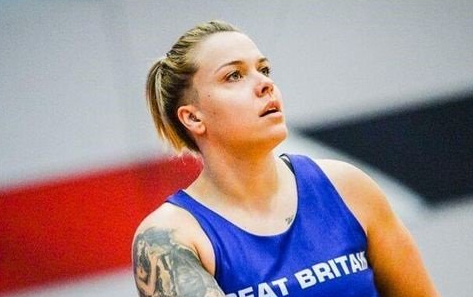
However, as the many achievements of the children whose families we have supported demonstrate, it is no barrier to success, and the most important thing is to always encourage full participation in whatever your child shows an interest in.
Jude’s Personal Story:
Sharing the News
When and how you tell close family, friends and other relatives about your child’s condition is a very personal decision which will be impacted by how and when the diagnosis occurred, the individual prognosis for your child and the potential treatments available.
There is no right or wrong way or time to share the news, however, being well informed about the condition and having the opportunity to connect with other parents who can understand what you are feeling will likely help.
Once you do share the news, your relatives and friends will probably want to know how they can support you and your child, so take advantage of the experiences being shared by other parents, to help you feel better equipped to answer such questions and get the support that is right for you.
Support
Steps is here to offer emotional and practical support.
The Steps closed Facebook Group is a friendly and safe way of discussing your worries, sharing tips and finding emotional support. Our Family Contact Service identifies someone else who has been through a similar situation and who’s happy to talk about their experiences, on a one-to-one basis, to offer support.
You can reach out to Steps with your questions, concerns and requests via email info@steps-charity.org.uk or leave a voicemail message on 01925 750271 and one of the team will be in touch.
All our PFFD links and related resources can be found below





)