Georgia’s Story
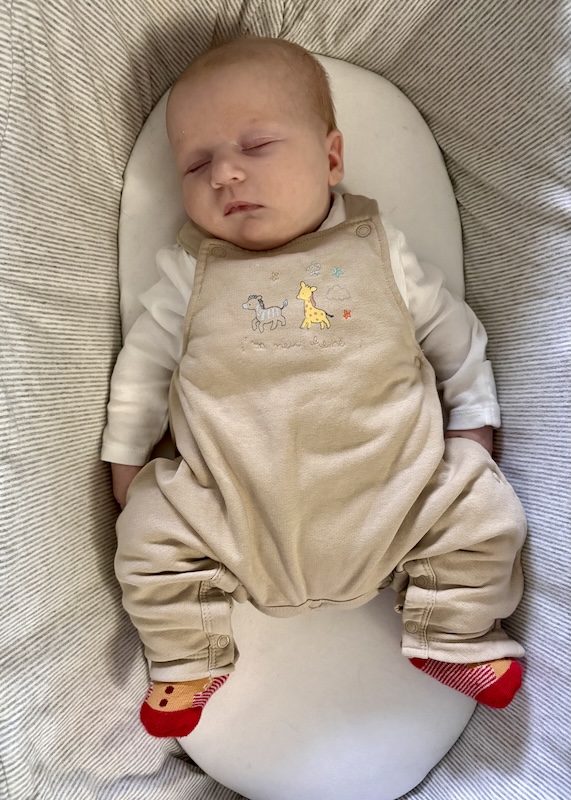
Our family’s journey with hip dysplasia spans three generations.
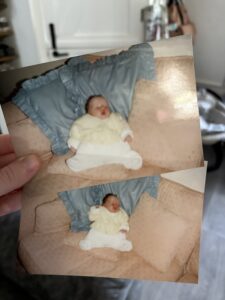 It began when my mum (Maeve’s Nana) was diagnosed with developmental dysplasia of the hip (DDH) as a baby. Back then, the treatment was double nappies—and thankfully, it worked.
Then, in 1994, when I was born, I was also diagnosed with DDH. I was treated in a Von Rosen Splint, which was also successful.
Our first child, Ralphie, was born in 2017. Even with my history of DDH, he was never offered an ultrasound scan to check for it. All of his newborn examinations were normal, and thankfully, he didn’t have DDH.
However, when our daughter, Maeve, was born in 2024, we knew she would have a routine ultrasound scan at six weeks old because of my history of DDH.
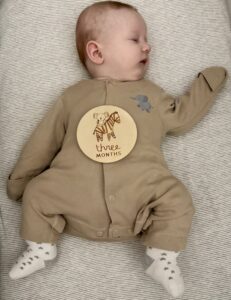 Those six weeks flew by, and we attended her scan. We were told that the measurements were slightly outside the normal range, but that this was quite common, and we would be invited back in a few weeks for another scan.
The very next day, I received a phone call from the Orthopaedic team at our local hospital. My heart sank when they told me we had an appointment with the consultant the following week. When I asked why, they explained that, because of my history, the consultant wanted to assess Maeve in person. Looking back, I’m so grateful they did.
On 16th January 2025, we attended the appointment. The consultant examined Maeve, moving her legs, checking the position of her hips and looking for the well-known ‘click’—which she never had. She was diagnosed with developmental dysplasia of the hip (DDH), and he decided to fit her with a Pavlik Harness there and then.
I remember feeling completely overwhelmed. My first thought was, it’s all my fault. Because I’d had DDH as a baby, I convinced myself it was somehow my fault that my daughter had it too. With lots of reassurance from my husband and the nurses, we slowly began to accept our new normal. We were told there would be regular scans, consultant appointments and weekly checks to make sure Maeve’s Pavlik Harness was fitting correctly.
 We got back to the car and completely froze. Suddenly, we realised we didn’t know what Maeve could and couldn’t do while wearing her new accessory. We rang the hospital from the car park to check whether she could still travel safely in her car seat, and thankfully, the answer was yes. We headed home and spent the next few days adjusting to life with the Pavlik Harness.
For the next nine weeks, Maeve travelled back and forth to hospital for scans and weekly checks. With every appointment, our hopes rose and fell as we were told she needed to stay in the harness for just a little longer. Then, on 20th March 2025, we received the news we’d been hoping for—Maeve’s hips had improved significantly. The team were so pleased with her progress that they removed the Pavlik Harness, just in time for our family holiday.
When Maeve was over six months old, we returned to the hospital for an X-ray. The measurements were slightly outside the normal range, so we were asked to come back three months later for another X-ray. Although it was difficult hearing that we had to wait again, we tried to stay positive.
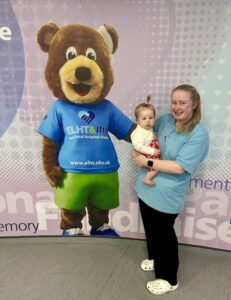 At our next appointment, we were told Maeve’s hips were exactly where they should be and everything looked great. The consultant explained that the measurements on the first X-ray may have been slightly affected by the position Maeve was in during the scan, which can sometimes alter the angles that are measured. Hearing that was reassuring. We were discharged there and then, knowing that our DDH journey had finally come to an end.
Throughout our DDH journey, I was still able to attend our baby classes, including baby massage and baby sensory. The baby massage sessions were adapted slightly to suit Maeve, and the team at Jenni’s House were incredible. They were so kind and accommodating, and they shared stories of other families who had been through the same experience. Hearing that it had become such a distant memory for them gave me so much hope and reassurance.
Looking back now, I remember how much I hated the Pavlik Harness at the time. But if you asked me today, I’d tell you it’s an incredible piece of equipment that helped my little girl become hip healthy. I’ll always be grateful that the medical team acted so quickly and that the harness meant Maeve avoided more invasive treatment.
Every emotion I felt throughout our journey was valid. If you’re going through this yourself, please know it’s okay to feel however you’re feeling. Reading other families’ DDH stories helped me so much, and I hope sharing ours will do the same for someone else.
Despite wearing the Pavlik Harness, Maeve reached all of her developmental milestones at the expected times. Today, she is a cheeky 19-month-old who loves walking, running and jumping. Looking at her now, you’d never know the journey she went through in those first few months of her life.
As for my mum and me, we’re both doing absolutely fine too. Three generations of our family have been affected by DDH, and thanks to early diagnosis and treatment, we’ve all gone on to live full, active lives.
To anyone currently navigating a DDH journey: be kind to yourself. Trust the process, celebrate every little milestone, and remember—you are not alone.